

Mind Control Files
MKUltra in the Senate Record
Audio edition
The 1977 Senate record did not whisper about MKUltra. It named the program, the destroyed files, the recovered boxes, and the unwitting tests.
MKUltra does not need fog machines.
The official record already has enough smoke in it.
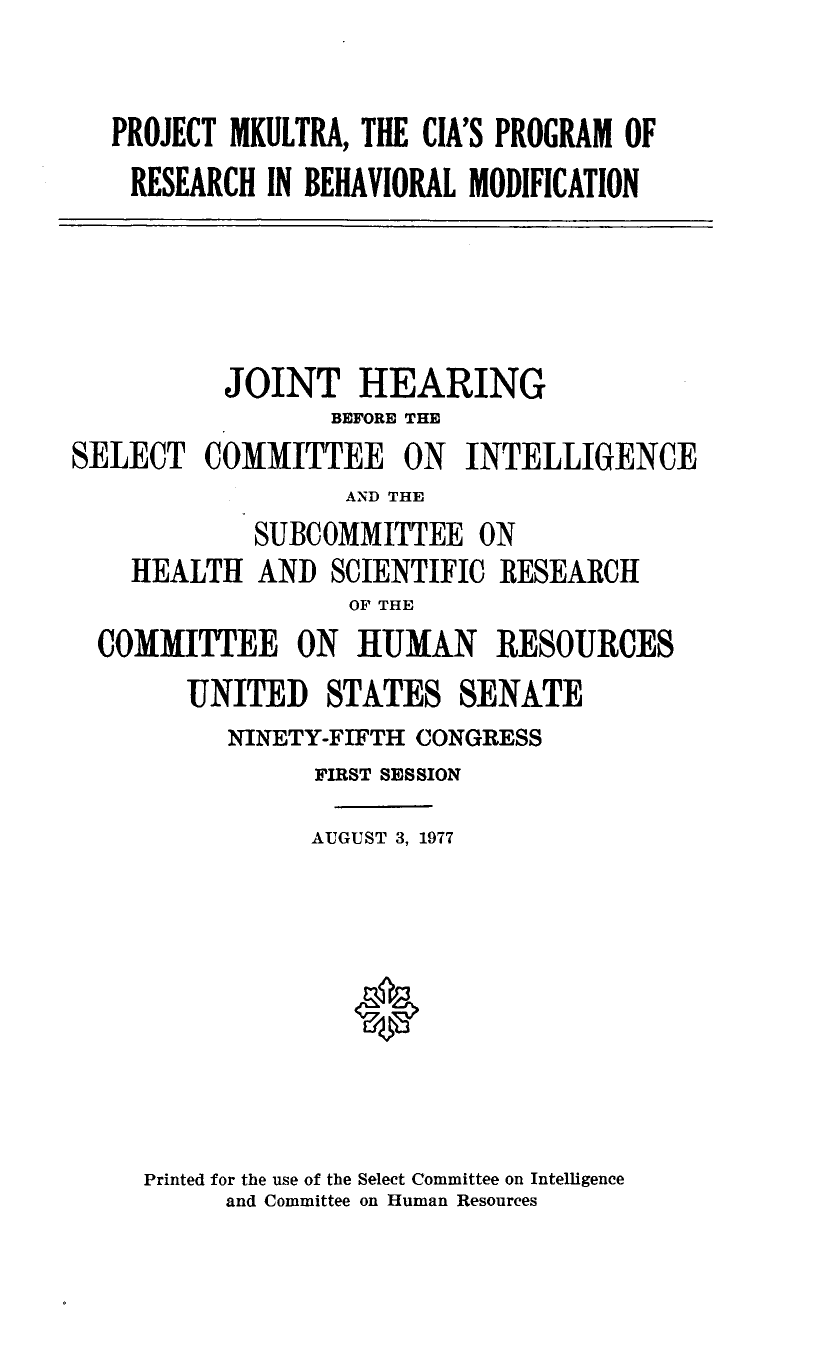
On August 3, 1977, a joint Senate hearing put the CIA’s behavioral modification program into public text. Not as campfire lore. Not as somebody’s fever board. As a government hearing titled Project MKUltra, the CIA’s Program of Research in Behavioral Modification.
That title is doing a lot of work before the first witness even sits down.
The timeline
CIA Director Stansfield Turner told the Senate that Project MKUltra was conducted from 1953 to 1964 as an umbrella project for sensitive subprojects.
Turner said much of what investigators knew in 1975 came from a 1963 Inspector General report on MKUltra.
Senator Edward Kennedy said records of the activities were destroyed in January 1973 at the instruction of then-CIA Director Richard Helms.
Turner reported the discovery of seven boxes of documents related to Project MKUltra.
The joint hearing records what the recovered material showed: 149 subprojects, concealed funding channels, unwitting testing, and institutions pulled into the program.
What happened
The Senate hearing opened with the plainest possible problem: the CIA had run human experimentation programs, earlier investigators had not received the full record, and new files had appeared after a Freedom of Information request pushed the agency into finding more.
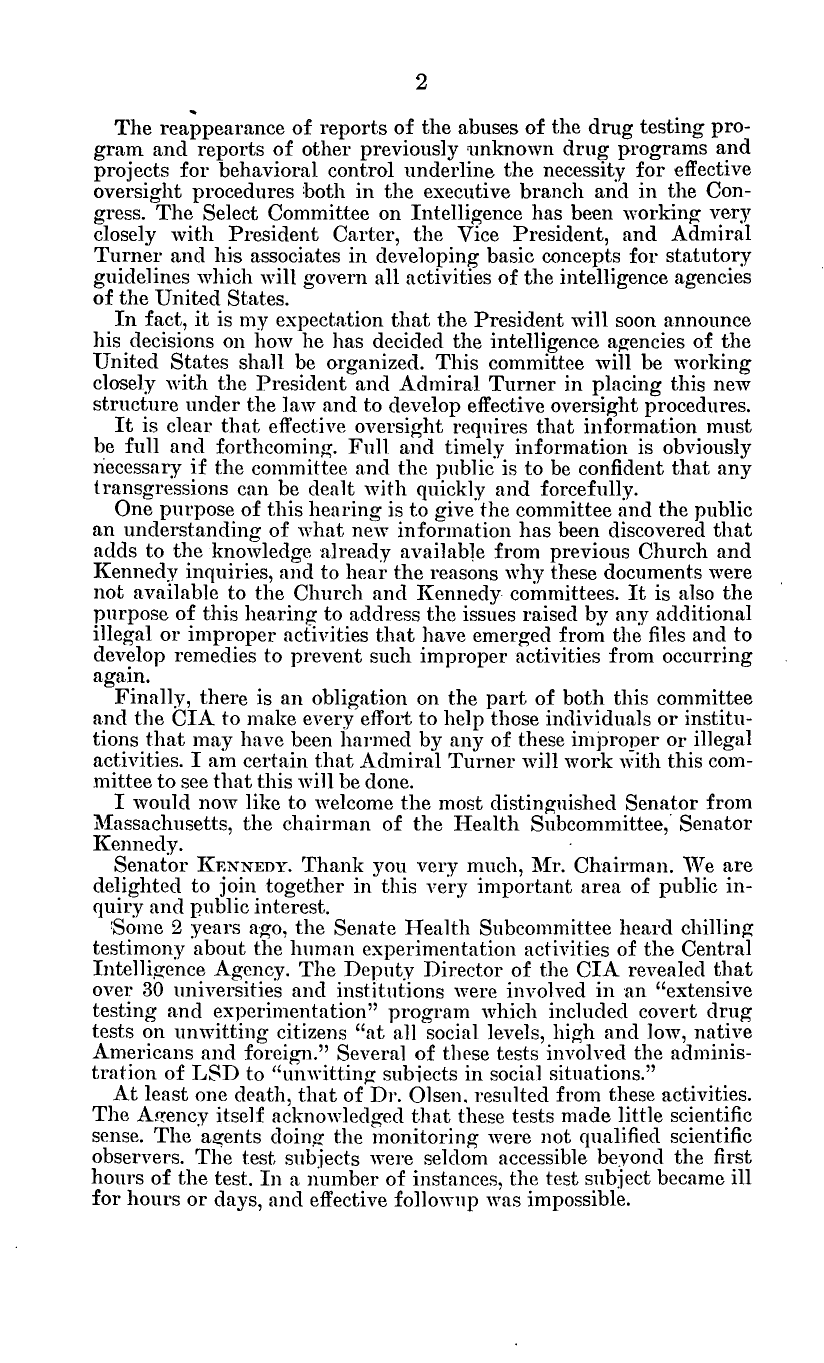
Kennedy described the earlier testimony as “chilling.” He said the CIA’s program included covert drug tests on unwitting people “at all social levels, high and low, native Americans and foreign.” He said several tests involved LSD given to “unwitting subjects in social situations.”
That is not a vibe. That is the hearing transcript.
The ugliest line is not hidden in a footnote.
Kennedy said the Central Intelligence Agency drugged American citizens without their knowledge or consent. He also said the agency used university facilities and personnel without their knowledge, and funded leading researchers often without their knowledge.
That is the part where the room stops being historical and starts feeling current.
Because the mechanism is not magic. It is paperwork, money, classification, intermediaries, professional respectability, and nobody being told where the wire really runs.
What the record shows
Turner’s prepared statement gives the structure.
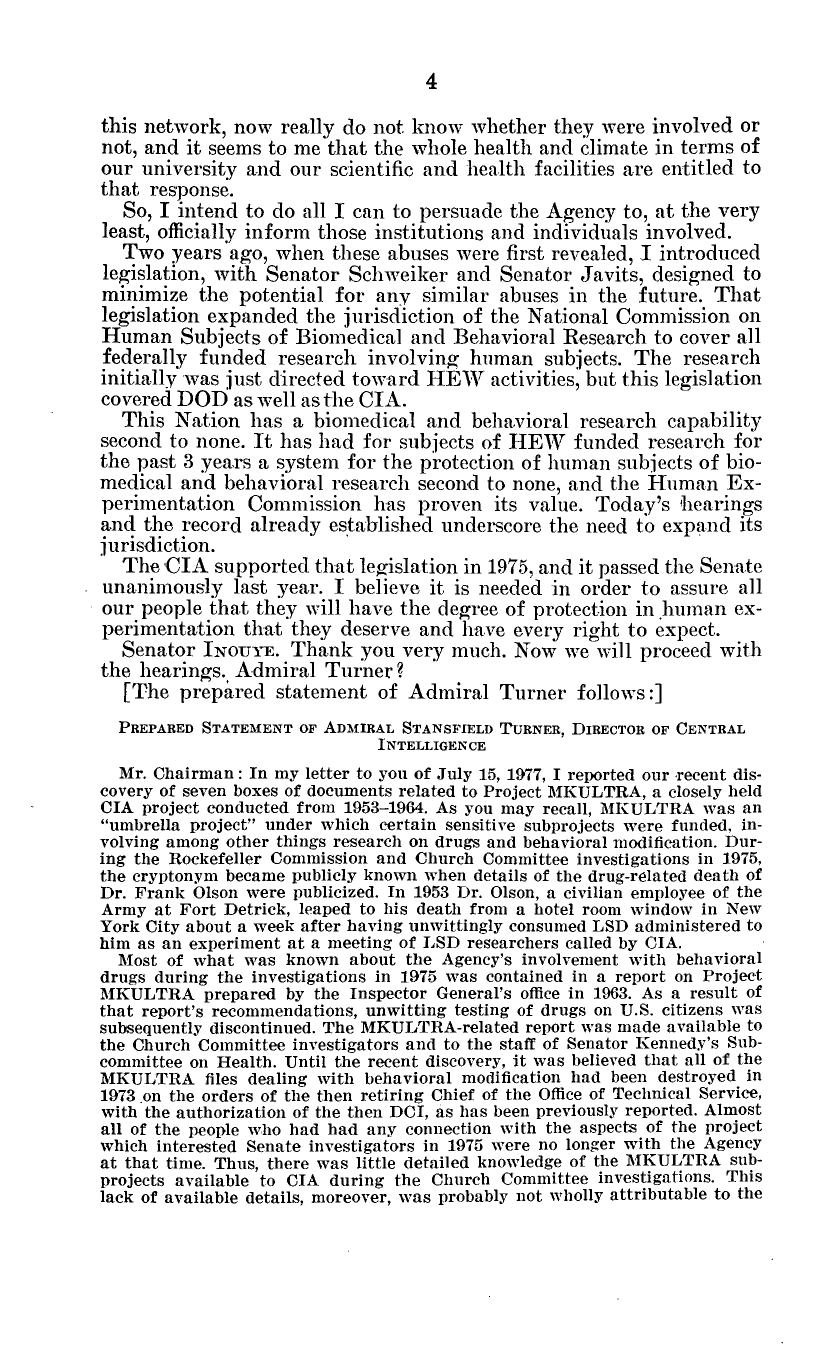
He told the committee that seven boxes of MKUltra documents had been discovered. He called MKUltra a “closely held CIA project” conducted from 1953 to 1964. He described it as an umbrella project involving research on drugs and behavioral modification.
Then the statement explains why the recovered boxes mattered: it had previously been believed that all MKUltra files dealing with behavioral modification had been destroyed in 1973.
The recovered material was not clean and complete. Turner said the folders were mostly finance folders: approvals, vouchers, accountings, and scattered project proposals or memoranda.
That detail matters.
If the surviving archive is mostly money paperwork, then the program is being reconstructed from the financial trail after the operational record was mostly gone. That is exactly the kind of record that bureaucracies leave behind when the story has been shaved down to invoices.
The CIA director reported the discovery of seven boxes of documents related to Project MKUltra.
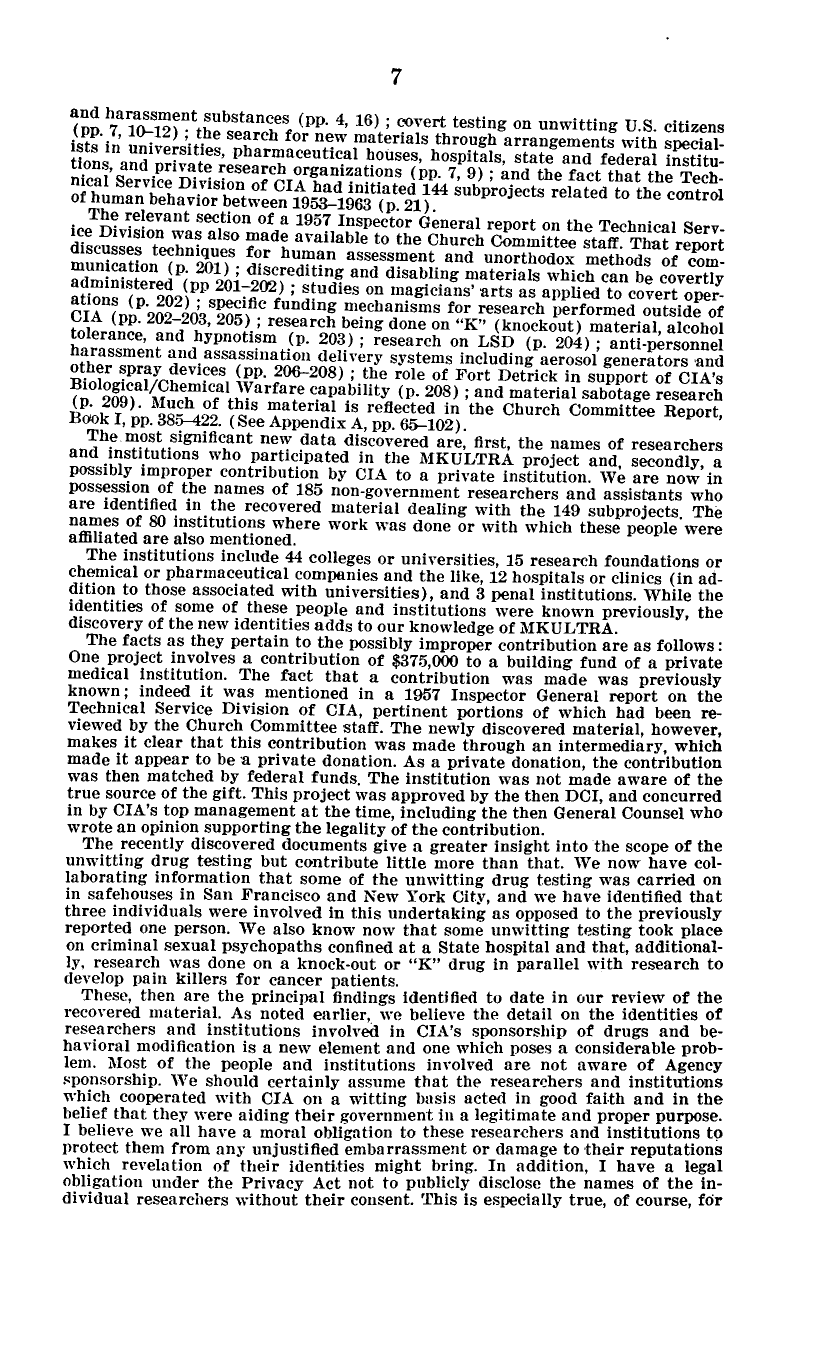
Turner said the recovered documents included 149 MKUltra subprojects, many connected to behavioral modification, drug acquisition, drug testing, or administering drugs surreptitiously.
The transcript lists subprojects involving tests on unwitting subjects, and Kennedy described covert LSD testing in social situations.
Turner said the recovered material identified 185 non-government researchers and assistants, plus 80 institutions where work was done or where those people were affiliated.
The destroyed-record problem
The record is not just “MKUltra existed.”
The record is also that the record was broken.
Kennedy said the records of the activities were destroyed in January 1973 at Helms’ instruction. Turner said it had been believed that all MKUltra behavioral modification files had been destroyed in 1973 on orders of the retiring chief of the Office of Technical Service, with authorization from the then-Director of Central Intelligence.
Two years of Senate inquiries had apparently failed to produce the newly recovered files. Then a Freedom of Information request helped shake them loose.
That is the shape:
A classified CIA umbrella project funds research into drugs, behavior, hypnosis, covert delivery methods, and human testing.
Universities, hospitals, foundations, clinics, companies, and researchers appear in the recovered material, sometimes wittingly and sometimes not.
The main files are destroyed, leaving the public record dependent on later discoveries and financial remnants.
Seven boxes survive in a place earlier searches had missed, and the official story has to widen.
The sinister part is not that someone made a dramatic confession in a shadowy basement.
The sinister part is that the official version is already bad enough.
Why this matters
MKUltra gets treated like a pop-culture password now. Say it and people either lean forward too fast or roll their eyes on schedule.
That reaction protects the record from being read.
The Senate transcript is colder than the meme version. It is not trying to be spooky. It is trying to account for a classified program after the files were mostly destroyed.
That makes the record more important, not less.
The hearing names the machinery:
The transcript describes drug testing on people who did not know they were test subjects.
The recovered material identified researchers, assistants, and institutions tied to the program.
Turner described intermediary funding mechanisms used to conceal CIA sponsorship of research projects.
The transcript repeatedly returns to destroyed files, incomplete knowledge, and the difficulty of identifying who was used.
No monster mask required.
Just the administrative face of a program that used people as material.
The pattern hardens
The recovered documents included 149 subprojects.
Some involved human volunteers. Some probably involved human volunteers. Some may have included unwitting subjects. Six subprojects are listed as involving tests on unwitting subjects.
Then the record gets wider.
Research on hypnosis. Acquisition of chemicals and drugs. Magicians’ arts useful in covert operations. Human behavior. Sleep research. Psychotherapy. Polygraph work. Drug delivery systems. Funding mechanisms. Toxins and biologicals. Fort Detrick support.
This is the part where the old cartoon version fails. It was not one guy with a beaker cackling next to a file cabinet. It was a funded architecture with categories, subprojects, intermediaries, and institutions.
The whole thing reads less like a secret and more like a machine that worked exactly because too many parts could pretend they were not the whole machine.
What survived
Here is the clean version.
The CIA ran MKUltra from 1953 to 1964 as an umbrella project for sensitive subprojects involving drugs and behavioral modification.
The Senate record says people were drugged without knowledge or consent.
The record says files were destroyed in 1973.
The record says seven boxes were later found.
The record says those boxes pointed to 149 subprojects, concealed funding mechanisms, 185 non-government researchers and assistants, and 80 institutions.
That is the story without decoration.
The archive is damaged. The admission is official. The machine was real enough to leave receipts.
Sources
Senate hearing page: Project MKUltra, August 3, 1977